47 sonuçtan 33-47 arası gösteriliyor
ANTALYA
-
SS_09-02
SCADA: Manage Water in the City
SS_09-02It is a setup where 360° water management is simulated in the city with SCADA and the visitor will be in the role of the operator. Water management is realized in the simulated city by performing different tasks in three categories as Drinking Water, Waste Water and Pressure Management. Physical tools such as valves, buttons, etc. will be used for the tasks, and warnings and solutions are monitored on the screen.
SS_09-02 -
R_12-02
Soccer Match with Robots
R_12-02Play a soccer match by controlling your own robots in a simulated soccer field environment.
R_12-02 -
TD_11-02
Soil Types
TD_11-02There are 3 different soil types in the transparent lanterns on the table. These are zonal (native) soils, introzonal soils, azonal (transported) soils. The visitor examines the soil by getting information about the soil types by examining the graph on the lantern.
TD_11-02 -
R_13-02
Sorting Robot
R_13-02The unit has two trays and 2 sets of moveable parts. Visitors race the robot to transfer the bounded pieces from the tray, which is also set up on their side, to the other. By pressing the button, the visitor and the robot arm both place the blocks on the appropriate (matching) tray. There are three different speed phases. Ideally, the robot should successfully complete the task faster and more precisely.
R_13-02 -
TD_06-02
Spraying
TD_06-02Multimedia about the three methods can be accessed on the screen and the result will be which one is more efficient – the human will do it slowly, there will be extra comparative information on the screen explaining that the human spraying is slower than the other spraying method.
TD_06-02 -
O_17-02
Suspension
O_17-02In this setup, visitors comprehend how suspension systems affect the comfort and driving performance
in vehicles. Thanks to the setup
in this station where the suspension system is explained, they will find an answer
to the question of how the vehicle on a bumpy road shakes and how this shaking
is minimized by the suspension system.O_17-02 -
O_19-02
Torque-Power
O_19-02Visitors will experience the complex structure of torque power
with simple mechanisms and associate it with vehicle power. The station, where the
effects of torque power on vehicles will be experienced with mechanisms created with mechanical systems,
is an
interactive station where visitors can learn the accelerations that the size
differences in the wheels give to the vehicles by comparing them with each other.O_19-02 -
TD_13-02
Tractor Simulator
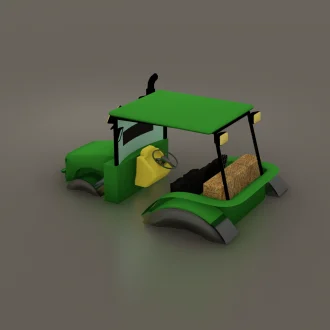
TD_13-02In this exhibition unit that serves 2 users, visitors sit on the seat and fasten their belts. When they touch the steering wheel, the game starts and they start to do the work in the field with the tractor in the game.
TD_13-02 -
O_18-02
Transmission
O_18-02The transmission or gearbox is the drivetrain that transmits the motion received from the engine through the thrust pad (clutch) to the shaft or differential at the desired torque value. It examines the transmission movement when the user shifts the gear of a running vehicle system.
O_18-02 -
TD_01-02
Tree Observation
TD_01-02The visitor turns the tree wheel and learns the names of the leaves and has general knowledge about recessive trees in particular.
TD_01-02 -
T_12-02
VR Space
T_12-02It is a virtual
reality platform where VR technology is experienced. Visitors experience
virtual reality experience
in multiple ways by performing physical movements such as running,
turning.T_12-02 -
SS_05-02
Water Cycle at Home
SS_05-02It is a device that invites you to rethink the water cycle at home through the concepts of blue water, gray water and waste water. The usage areas of mains and rainwater at home are learned interactively through pipes. When the correct matches are made with the pipes, led lights light up at the connection points.
SS_05-02 -
SS_04-02
Water Cycle in Nature
SS_04-02Graphics on the wall show the steps of the water cycle, groundwater and surface water sources. Visitors are introduced to the basic concepts on which the water cycle is based. When the clouds in the reservoir are placed on the cloud pictures indicated on the left side of the graphic, rain is visualized with led lights.
SS_04-02 -
SS_10-02
Water Footprint
SS_10-02It is a device to learn the amount of water required for the production of different foods and clothes. As the barcodes on the device panel are scanned, the water credit on the screen decreases according to the product. If the credit is insufficient, the amount of water required for the product is also indicated and the warning that the balance is insufficient is displayed on the screen. The button on the table allows visitors to try again by resetting the credit amount.
SS_10-02 -
O_11-02
What does the automobile consist of?
O_11-02Automobile components are presented to the users with a half-naked, half-filled structure that looks like a cross-section of the vehicle. The user listens to the voice narration of the vehicle parts and at the same time learns about their location in the vehicle as they will place the parts in the relevant area.
O_11-02